The evolution of maritime transport has seen a significant shift from bulk cargo to unitized freight, culminating in the specialized **container ship**. Initially, general cargo vessels used wooden containers or boxes, but the increasing diversity of goods, particularly those requiring careful handling or compact stowage, necessitated a more robust solution: **containerization**. This innovation spurred the development of purpose-built ships capable of efficiently loading, transporting, and safeguarding these standardized units. This article delves into the critical **design aspects of container ships**, illustrating how their engineering is meticulously shaped by cargo type, port infrastructure, operational demands, and prevailing economic trends in the **global shipping industry**.
**Container ships** are not monolithic; they are categorized in several ways, reflecting their diverse operational roles and capacities. Understanding these classifications is fundamental to appreciating their specialized design:
* **Based on Overall Sizing**:
* **Volumetric Capacity**: An older metric, focusing on the ship’s total volume.
* **TEU (Twenty-foot Equivalent Unit)**: The modern standard, indicating the number of 20-foot containers a ship can carry.
* **Dimensions and Tonnage**: Categories like **Panamax**, **Post-Panamax**, **Suezmax**, **Post-Suezmax**, and **Malacamax** define ships by their maximum dimensions to fit specific canals or straits.
* **Based on Mode of Handling**:
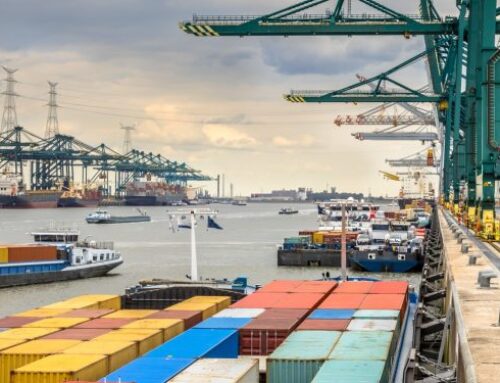
* **Box Container Ship**: The most common type, relying on **quay-side cranes** at major **container ports** for loading and unloading.
* **RORO (Roll-on/Roll-off) Ship**: Containers are driven on and off using heavy lift vehicles, often carrying both vehicles and containers.
* **LILO (Lift-on/Lift-off) Ship**: Equipped with their own onboard cranes, ideal for smaller terminals lacking extensive **port infrastructure**.
* **Based on Range of Service**:
* **Mother Ships**: Large vessels, often exceeding **10,000 TEU**, operating between major **container terminals**. Their size restricts access to smaller ports.
* **Feeder Vessels**: Smaller ships that transport containers between major and minor terminals, often serving **mother ships**. Many are **LILO type** due to the equipment limitations of smaller ports.
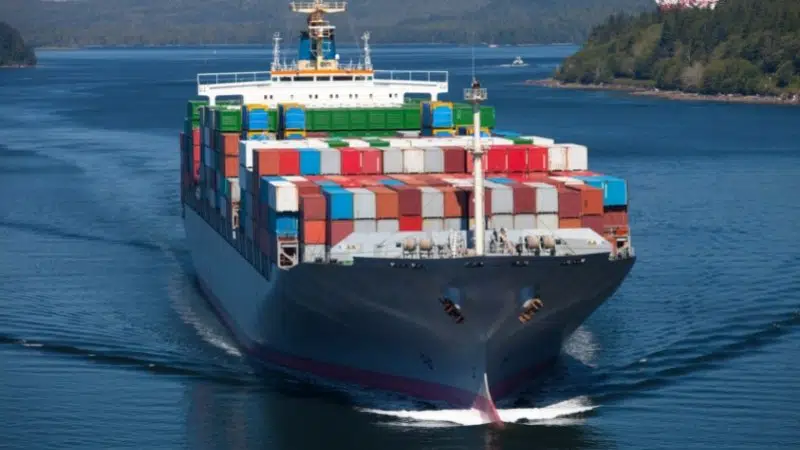
The **hull geometry** is arguably the most prominent design aspect of any vessel. A visual comparison immediately reveals that a **container ship’s hull** possesses a finer form than that of a bulk carrier or oil tanker. Its forward and aft sections are notably streamlined, rather than full. This distinctive shape is not arbitrary; it’s a direct response to the operational demands of the **container industry**.
Goods transported in containers are frequently high-value and time-sensitive. Consider a critical marine diesel engine shipped from Germany to an Indian shipyard; its timely and undamaged arrival is paramount to avoid construction delays. Consequently, **container ships** are designed for high-speed transit and rapid port turnaround. To achieve the necessary **high speed**, the **hull resistance** must be minimized, which is precisely what a fine-form hull accomplishes. This translates to a lower **coefficient of buoyancy**, typically ranging from **0.6 to 0.7**.
Another key geometrical characteristic is the **high prismatic coefficient**, meaning the hull section remains almost rectangular for most of the ship’s length. This design maximizes the internal volume, allowing for the accommodation of the greatest possible number of containers below deck.
The **midship section** drawing is a cornerstone of **container ship design**, integrating numerous functional and structural considerations, including cargo type, stowage methods, and overall capacity. Often, a ship’s type can be identified solely by its midship section.
Key features of a typical **container ship’s midship section** include:
* **Double Bottoms**: All **container ships** feature double bottoms, with the intervening spaces often utilized as tanks for ballast or fuel.
* **Longitudinal Framing**: Given the variable loading conditions that can induce significant hogging and sagging moments, **longitudinal framing** is employed to counter high longitudinal bending stresses.
* **Box-like Shape**: The midship section is almost rectangular, characterized by a **high midship area coefficient** (typically **0.75 to 0.85**). This maximizes internal volume for container stowage.
* **Minimized Bilge Strake**: The angular **bilge strake**, which joins the inner side shell and tank top, is kept to a minimum length, or even omitted in modern designs, to ensure maximum stowage capacity at the corners of the section.
One of the most critical structural innovations in **container ship design** is the **torsion box**. To understand its necessity, consider an open box structure like a paper cup without its reinforced rim; it lacks torsional strength and would easily twist and rupture under stress. Similarly, the open, box-like hull of a **container ship** inherently possesses a low polar moment of inertia, making it vulnerable to twisting forces.
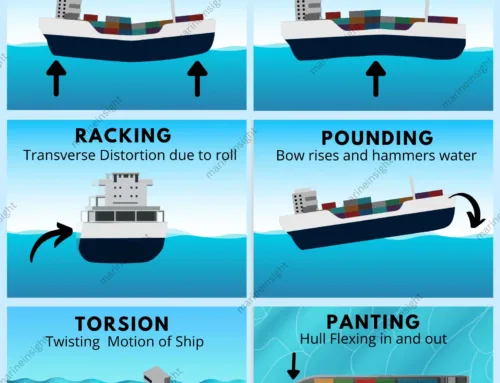
At sea, **container ships** are subjected to complex wave loads. When waves strike the vessel at approximately 45 degrees to its direction of travel, a phenomenon known as **torsion** occurs. This periodic twisting force, if unchecked, could lead to catastrophic structural failure. To counteract this, the uppermost edges of the port and starboard sides are significantly strengthened with high-scantling web sections, creating a continuous **box-like structure** at every frame. This is the **torsion box**, extending along the entire length of the ship from the aft peak bulkhead to the forward collision bulkhead.
**Classification societies** mandate specific rules for **torsion box design**. Modern **naval architecture** utilizes **Finite Element Method (FEM)** platforms to analyze torsional responses across various sea states, ensuring the design meets stringent safety limits. Given its vital role in hull girder strength, the **torsion box** is a high-priority item during annual structural surveys.
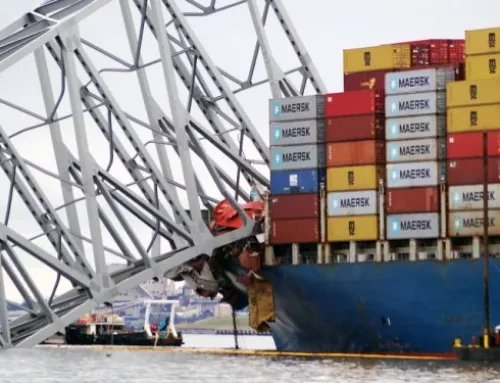
Effective **container stowage** is paramount for both safety and operational efficiency, and its improper execution has been a factor in numerous maritime incidents.
* **Orientation**: Containers are always stowed with their longer dimension running fore-to-aft. This orientation minimizes cargo shifting within the container, enhancing safety against impact damage, particularly as ships are more prone to rolling than pitching or yawing.
* **Below Deck**: Below the uppermost deck, containers are secured by **cell guides**—angle sections that prevent lateral or longitudinal motion and aid in guiding containers during loading. These guides are not part of the primary hull structure.
* **Above Deck**: On deck, containers are restrained using **lashings**. **Twist locks** fitted between containers prevent vertical movement, while lashing rods, often deployed from **lashing bridges**, secure against longitudinal and transverse motions. **Turnbuckles** maintain tension in the lashings.
The complexity of **container loading plans** is immense. These plans, provided with the ship’s design, must account for varying container numbers and weights, the sequence of ports of call, and critical stability and strength considerations. For instance, a container destined for Port B should ideally not be stowed beneath one for Port C. Furthermore, heavier containers cannot be placed above lighter ones, as this would raise the vessel’s **center of gravity** and compromise **stability**. Modern **logistics** relies on specialized computer programs to generate these intricate loading plans, also ensuring that visibility from the **navigation bridge** remains unimpeded—a factor that often influences the height of container stacks forward of the bridge. Some **ultra-large container ships**, like the **Maersk Triple E class**, address this by shifting their superstructures midship to maximize container capacity aft.
The field of **container ship design** is continuously evolving. Specialized **reefer ships**, for example, are equipped with advanced cooling systems to transport refrigerated containers. Recent market trends, such as the adoption of **slow steaming**, have led to significant modifications, including **hull optimization** (e.g., “nose jobs”) and the installation of larger diameter, lower RPM propellers for improved **propulsive efficiency**. While seemingly counter-intuitive to the high-speed demands, these ships still operate at speeds significantly higher than bulk carriers or oil tankers. The ongoing optimization of **container ships** for current and future industry requirements underscores the dynamic nature of **naval architecture**, requiring designers to anticipate market trends and technological advancements years in advance.
#ContainerShipping #MaritimeDesign #NavalArchitecture #GlobalLogistics #ShipEngineering #CargoTransport #TEU #ShippingIndustry #SupplyChain #OceanFreight