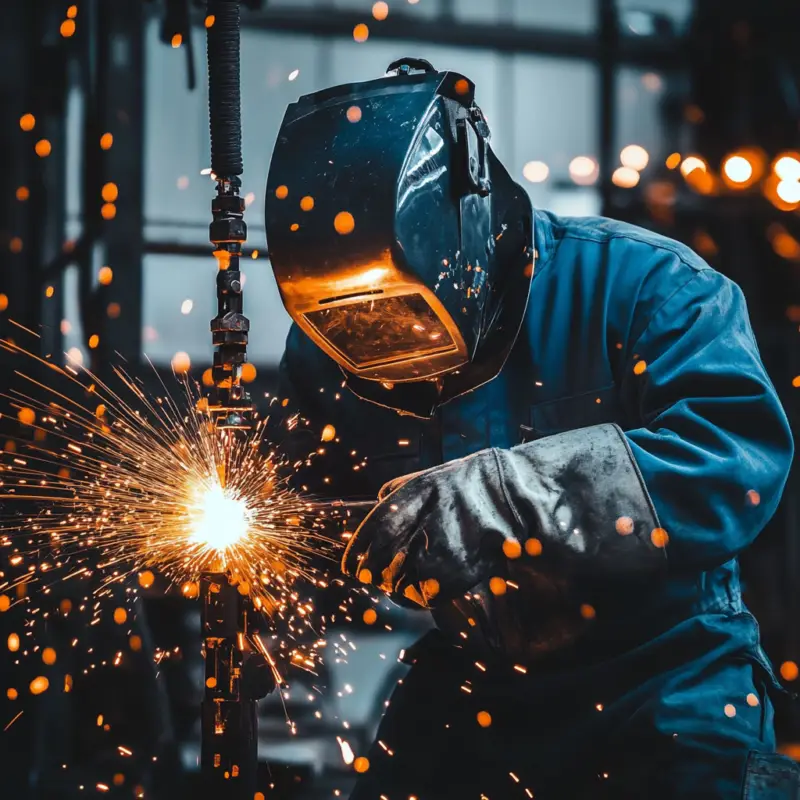
Fabrication & Welding
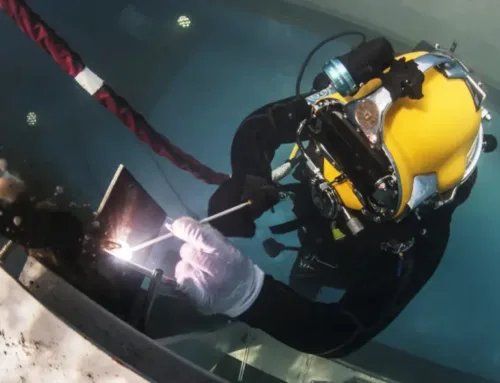
At our class-approved workshops, we take pride in offering top-notch fabrication and welding services to meet your structural and equipment needs. Our skilled team ensures high-quality workmanship and attention to detail in every project we undertake, providing reliable solutions that adhere to industry standards.

Here are 20 important, critical, professional, and common questions and answers for the “Fabrication and Welding” topic:
1. What is Fabrication in the Maritime Industry?
Fabrication in the maritime industry involves cutting, shaping, and assembling metal components to build or repair ship structures, including hulls, decks, and internal frames.
2. Why is Welding Essential in Shipbuilding and Repair?
Welding is essential because it provides a strong, durable, and watertight bond between metal components, which is crucial for the structural integrity and safety of the vessel.
3. What Are the Different Types of Welding Used in Shipbuilding?
Common welding types include Shielded Metal Arc Welding (SMAW), Gas Metal Arc Welding (GMAW/MIG), Gas Tungsten Arc Welding (GTAW/TIG), and Flux-Cored Arc Welding (FCAW).
4. How is Quality Control Ensured in Fabrication and Welding?
Quality control is ensured through rigorous inspection processes, non-destructive testing methods (such as ultrasonic testing and X-ray inspection), and adherence to industry standards and specifications.
5. What Are the Key Challenges in Maritime Welding?
Key challenges include working in confined spaces, exposure to harsh environments, maintaining high precision and quality, and ensuring safety due to the risks of fire and toxic fumes.
6. What Materials Are Commonly Used in Ship Fabrication?
Common materials include various grades of steel, aluminum, and other alloys specifically designed to withstand harsh marine environments and meet strength requirements.
7. How Do Welding Procedures Differ for New Construction vs. Repair Work?
New construction welding follows pre-approved procedures with a focus on precision and alignment, while repair welding often involves modifying techniques to accommodate existing structures and damage.
8. What Safety Measures Are Important in Welding Operations?
Safety measures include using personal protective equipment (PPE) like helmets, gloves, and welding aprons; ensuring proper ventilation; training workers on safety protocols; and maintaining fire prevention systems.
9. What Is a Welding Procedure Specification (WPS)?
A Welding Procedure Specification (WPS) is a documented set of instructions that outlines the welding process, materials, equipment, and parameters needed to achieve a specific weld quality.
10. How Does Environmental Conditions Affect Welding Quality?
Environmental conditions like humidity, wind, and temperature can affect welding quality by causing defects such as cracks, porosity, or incomplete fusion, making it essential to control these conditions.
11. What is Non-Destructive Testing (NDT) in Welding?
Non-Destructive Testing (NDT) involves inspecting welds without damaging them to detect internal or surface defects using methods such as ultrasonic, radiographic, magnetic particle, and dye penetrant testing.
12. How Are Welding Defects Identified and Corrected?
Welding defects are identified through visual inspection and NDT methods. Once detected, defects are corrected by grinding out the flawed weld and re-welding according to approved procedures.
13. What Role Does Fabrication Play in Ship Modification Projects?
Fabrication is crucial in ship modification projects as it involves creating and installing new components or structures that enable the vessel to perform new functions or meet updated regulations.
14. How Is Corrosion Protection Integrated Into Fabrication and Welding?
Corrosion protection is integrated by using corrosion-resistant materials, applying protective coatings, and ensuring proper weld quality to prevent moisture intrusion and material degradation.
15. What Are the Common Standards and Certifications Required for Maritime Welding?
Common standards include those set by the American Welding Society (AWS), International Organization for Standardization (ISO), and classification societies like ABS, DNV, and Lloyd’s Register.
16. What Is the Importance of Skilled Labor in Welding and Fabrication?
Skilled labor is essential for maintaining high-quality welds, ensuring safety, minimizing defects, and completing projects on time and within budget.
17. How Do Fabrication Shops Ensure Precision in Metal Cutting?
Precision is ensured through the use of advanced technologies such as CNC cutting machines, laser cutters, and water jet cutters, combined with skilled technicians to oversee the process.
18. What Are the Key Considerations for Selecting Welding Consumables?
Key considerations include the base material’s properties, desired weld characteristics, environmental conditions, and the specific welding process being used.
19. How Is Welding Inspected and Certified?
Welding is inspected and certified by qualified inspectors using NDT methods, verifying that the welds meet the required standards and specifications.
20. What Role Does Welding Play in Structural Integrity?
Welding plays a critical role in structural integrity by ensuring that all metal components are securely bonded, which is essential for the vessel’s overall strength, safety, and seaworthiness.