Ro-Ro (Roll-on/Roll-off) vessels are cornerstones of modern **maritime logistics**, celebrated for their efficiency in transporting both **cargo** and **passengers**. Their ability to facilitate rapid loading and unloading, coupled with frequent port calls and shorter voyages, has made them a preferred choice for many **seafarers** and **shipping companies**. However, beneath this veneer of operational prowess lies a complex array of **safety challenges** that warrant closer examination. Despite their indispensable role, Ro-Ro ships have faced scrutiny regarding their inherent design and operational vulnerabilities, leading to a decline in their perceived safety among maritime professionals. This article delves into eight critical factors that contribute to the unique **safety risks** associated with working on Ro-Ro vessels, distinguishing them from other ship types.
* **1. The Intricate Problem of Stability**
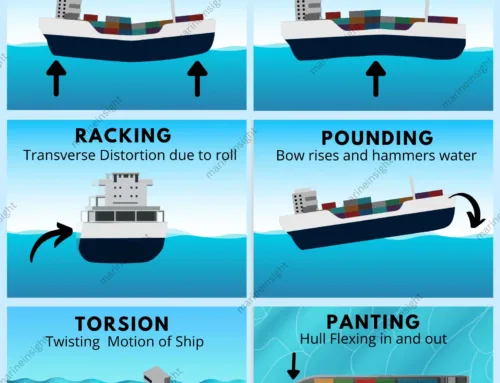
A vessel’s **stability** at sea is paramount for safe navigation. Ro-Ro ships, however, present a unique challenge due to their design, often featuring expansive **cargo decks** on upper levels and **accommodation blocks** situated even higher. This structural configuration makes them particularly susceptible to shifts in their **center of gravity**. Even a minor displacement of **stowed cargo** can critically compromise the ship’s **longitudinal** and **transverse stability**. Furthermore, events like **hull failure** leading to **water ingress** can rapidly escalate into a **capsize** scenario. External forces such as strong winds and adverse weather conditions can also significantly impact the **ship’s stability**, especially given the high profile of their superstructures.
* **2. Elevated Freeboard and Water Ingress Risk**
Many Ro-Ro vessels, particularly those dedicated solely to **cargo transport**, feature **cargo access doors** positioned perilously close to the **waterline**. In situations where the vessel experiences a significant **list** (tilting), these doors can become submerged. This proximity dramatically increases the potential for **water ingress** into the **vehicle decks**, a critical factor that can quickly lead to a catastrophic loss of **buoyancy** and subsequent **capsizing**.
* **3. Vulnerability of Cargo Access Doors**
Beyond their low placement, the **cargo access doors** themselves represent a significant point of vulnerability. If these doors are compromised, either through damage or being inadvertently left open, they become direct conduits for **seawater** during a **list**. A particular design flaw highlighted in some Ro-Ro vessels is the dual use of the **stern ramp** or bow door as both an access point and a structural component, making them more susceptible to damage and potential failure under stress.
* **4. The Absence of Transverse Bulkheads**
A defining characteristic of Ro-Ro ship design is the expansive, unobstructed nature of their **vehicle decks**, which often lack sufficient **transverse bulkheads**. While this design facilitates efficient **cargo handling**, it severely compromises the vessel’s **watertight integrity**. In the event of **flooding** or **water ingress**, the absence of these internal subdivisions allows water to spread rapidly across large areas, accelerating the loss of **stability**. Similarly, a lack of **fireproof bulkheads** means that a **fire** can propagate much faster, making containment significantly more challenging for the **crew**.
* **5. Challenging Location of Life Saving Appliances (LSA)**
In an emergency requiring **ship abandonment**, the swift deployment of **life rafts** and **lifeboats** is crucial. On many Ro-Ro vessels, however, these **Life Saving Appliances (LSA)** are situated at considerable heights above the **waterline**. This elevated positioning can make their safe and timely lowering exceptionally difficult, particularly when the ship is experiencing a severe **list** or in rough sea conditions, potentially endangering the lives of **seafarers** and **passengers**.
* **6. Exacerbated Impact of Adverse Weather Conditions**
Ro-Ro vessels are particularly sensitive to **adverse weather conditions**. Heavy seas and strong winds can induce significant **rolling** and **pitching**, further diminishing the vessel’s already complex **stability profile**. Such extreme motions have historically been implicated in numerous **maritime accidents**, including instances of **capsizing**, underscoring the critical need for robust **weather routing** and operational precautions.
* **7. Criticality of Cargo Stowage**
Effective **cargo stowage** is paramount on Ro-Ro ships. The nature of **vehicular cargo** (e.g., trailers, cars, trucks) means that any inadequately secured item can initiate a dangerous chain reaction. A single loose piece of **cargo** can shift, impacting others, leading to a substantial and potentially catastrophic shift in the vessel’s **center of gravity**. Furthermore, **trucks** and **trailers** often carry their own internal **cargo**, the shifting of which can also contribute to a perilous **list** or loss of **stability**.
* **8. Complexities of Cargo Loading Procedures**
Achieving optimal and **sequential cargo loading** on Ro-Ro vessels is frequently hampered by operational realities, including varying arrival times of **cargo units** at terminals and tight port schedules. This often results in **uneven cargo distribution**, a factor known to significantly compromise a ship’s **stability** and **trim**. Historical data from **maritime incidents** repeatedly points to improper or unbalanced **cargo loading** as a primary cause of accidents, highlighting a persistent operational challenge for **port operators** and **ship crews**.
The unique design and operational demands of Ro-Ro vessels, while offering unparalleled efficiency, also present a distinct set of **safety challenges**. Addressing these concerns requires a multi-faceted approach involving continuous improvements in **ship design**, stringent **operational protocols**, enhanced **crew training** in **emergency procedures**, and a proactive commitment from **ship owners**, **operators**, and **regulatory bodies** to prioritize **maritime safety** above all else. Understanding these inherent risks is the first step towards mitigating them and ensuring a safer working environment for all **seafarers**.
#RoRoSafety #MaritimeSafety #ShipDesign #SeafarerSafety #CargoVessel #NavalArchitecture #ShippingIndustry #MarineAccidents #StabilityIssues #PortOperations