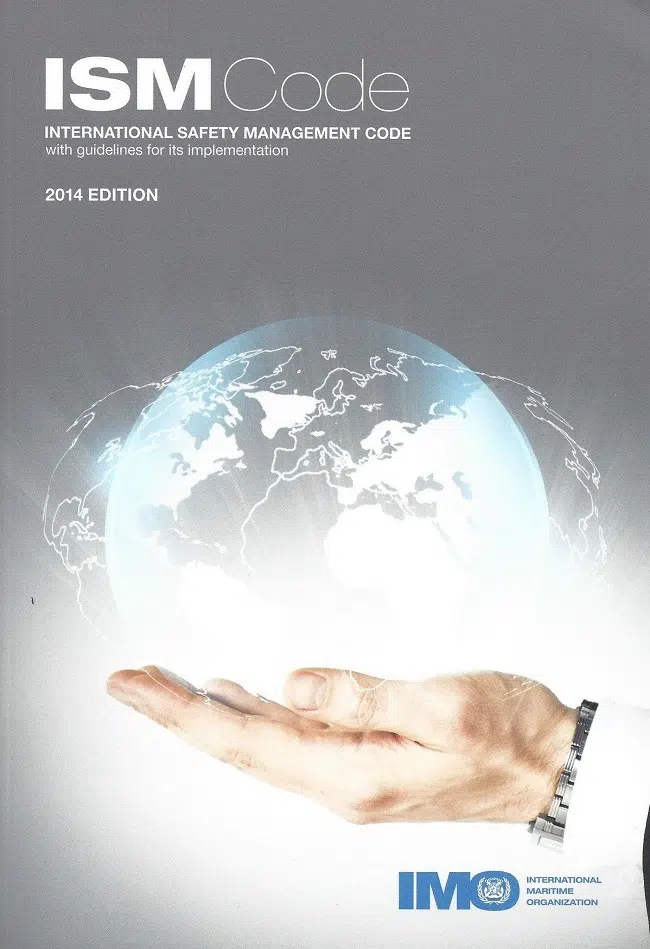
The **International Safety Management (ISM) Code**, often simply referred to as the **ISM Code**, stands as a pivotal international standard for the safe management and operation of ships and for pollution prevention. Its implementation has fundamentally reshaped how maritime operations are conducted, placing a strong emphasis on structured management systems to mitigate risks at sea.
**Origins and Evolution of a Critical Standard**
The genesis of the ISM Code dates back to the late 1980s, driven by increasing concerns over inconsistent management standards within the global maritime sector. Recognizing the need for a unified approach, the **International Maritime Organisation (IMO)** adopted the Code in 1993 through resolution A.741(18). It officially entered into force on **1 July 1998**.
Further solidifying its mandate, the 1994 amendments to the **International Convention for the Safety of Life at Sea (SOLAS Convention)** introduced Chapter IX, making the management of safe ship operations a mandatory component of this foundational maritime treaty. Subsequent amendments in 2000 and 2004, and the **ISM CODE 2018 Edition**, reflect the ongoing commitment to refine and strengthen its provisions in response to evolving industry needs and operational challenges.
**What the ISM Code Mandates**
At its core, the ISM Code is a mandatory marine industry regulation designed to ensure:
* **Safety at Sea**: Establishing clear operational procedures to prevent accidents and incidents.
* **Prevention of Human Injury and Loss of Life**: Prioritizing the well-being and safety of seafarers and all personnel on board.
* **Personnel Safety**: Implementing training and protocols to protect individuals in their working environment.
* **Avoidance of Environmental Damage**: Specifically targeting the protection of the marine environment from pollution.
* **Prevention of Property Damage**: Safeguarding vessels and their cargo.
The Code underscores that individual efforts, competence, and motivation are crucial in achieving positive safety outcomes. It provides a common platform for marine safety across vessels of all nationalities, eliminating discrepancies in safety protocol maintenance.
**Scope and Application**
The ISM Code’s broad applicability extends to virtually all types of commercial vessels engaged in international voyages, including:
* **Oil tankers**
* **Chemical tankers**
* **Gas carriers**
* **Bulk carriers**
* **Cargo ships**
* **Passenger ships**
* **Offshore structures**
While its principles are universal, the cornerstone of effective safety management lies with **shipowners** and top stakeholders, who must prioritize a safe working environment and operational practices.
**The Safety Management System (SMS): The Operational Backbone**
To ensure proper functionality and compliance with the ISM Code, every shipping company must establish and maintain a **Safety Management System (SMS)**. This structured and well-documented system empowers company personnel to implement the company’s safety and environmental policies effectively.
A robust SMS typically details requirements such as:
* **Establishing a managerial committee** to oversee various safety proceedings.
* **Defining and ensuring managerial officers** carry out their outlined duties appropriately.
* **Corroborating outlined responsibilities** against actual performance to identify and resolve discrepancies.
* **Conducting regular audits** (both internal and external) of the vessel and its operations to proactively address safety concerns.
* **Assessing all identified risks, hazards, and technical systems**.
* **Ensuring adequate training** for all personnel.
* **Conducting safety management audits, inspections, and drills** at appropriate intervals.
The SMS also emphasizes the importance of a **Planned Maintenance System** to keep vessels seaworthy and operational requirements fulfilled.
**Responsibilities and Compliance**
**Companies** (owners, managers, or bareboat charterers responsible for ship operations) bear the primary responsibility for adhering to the ISM Code. This includes:
* **Ensuring the master and crew are qualified**, well-informed about the company’s SMS, and understand relevant rules and guidelines.
* **Providing adequate training** and support in the working language.
* **Maintaining the ship** to remain seaworthy.
* **Recording the authority and interrelation** of all personnel responsible for safety and pollution prevention.
* **Ensuring medically fit seafarers** on all ships.
* **Maintaining constant lines of communication** between onshore and shipboard personnel.
* **Providing adequate resources** and support for designated personnel.
* **Defining tasks clearly** and assigning them to qualified personnel.
**Administrations** (the flag states under which vessels operate) are responsible for verifying compliance. This involves external audits, typically conducted every two to three years. Upon successful incorporation of all safety requirements, the vessel is issued a **Safety Management Certificate (SMC)**, signifying its adherence to international safety standards. A **Document of Compliance (DOC)** is issued to the company that complies with the Code’s requirements.
**ISM Code and International Conventions**
The ISM Code serves as an intrinsic part of the IMO’s broader efforts to ensure and effectuate safety for seafarers and prevent pollution. It integrates the principles of various international conventions, including **SOLAS 74** and **MARPOL 73/78**, bringing them together into a unified management framework for vessels and the wider maritime industry. This holistic approach ensures that environmental protection and safety protocols are not merely regulatory checkboxes but are deeply embedded in daily operations.
**Conclusion**
The **International Safety Management Code** is more than just a set of rules; it is a comprehensive framework designed to foster a culture of safety and environmental responsibility throughout the maritime industry. By mandating structured management systems, clear responsibilities, and continuous improvement through audits and training, the ISM Code remains an indispensable tool in safeguarding lives at sea, protecting the marine environment, and ensuring the efficient and safe operation of global shipping. Its ongoing evolution reflects the dynamic nature of maritime operations and the unwavering commitment to higher safety standards worldwide.
#ISMCode #MaritimeSafety #ShipManagement #SOLAS #PollutionPrevention #SeafarerSafety #IMORegulations #SafetyManagementSystem #ShippingIndustry #MarineEnvironment