The term “crash” typically evokes images of accidents and damage. However, in the maritime industry, when combined with “manoeuvring,” it refers to a vital preventative procedure designed to avert **collisions** and accidents at sea.
### Why Crash Manoeuvring is Indispensable
Unlike land vehicles equipped with conventional braking systems, **seagoing vessels** lack traditional brakes. Stopping a ship relies entirely on reversing the rotational direction of the **main engine** and, consequently, the **propeller**. This action is crucial for rapidly reducing or halting the vessel’s forward momentum, especially when on a potential **collision course**.
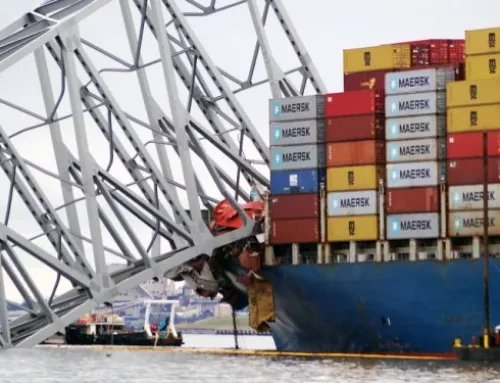
**Crash Manoeuvring** is primarily executed to prevent a ship from colliding with another vessel, a fixed structure like a **jetty**, **landmass**, or even an **iceberg**. While this procedure subjects the **main engine** to significant stress and loading, it is a necessary measure to ensure the **safety of the ship** and its crew.
### Executing the Manoeuvre: A Step-by-Step Guide
**Crash Manoeuvring** involves turning the **main engine** in the opposite direction to drastically reduce the ship’s forward speed. After a period, the vessel will come to a stop and begin moving astern. The procedure typically unfolds as follows:
* **Emergency Call**: When a **navigational officer** declares an immediate need to stop to avoid a **collision**, controls are swiftly transferred to the **engine room**.
* **Astern Command**: The bridge signals an “astern” direction via the telegraph, which is acknowledged by the **engine room**.
* **Engine Response**: Initially, only the **starting air cam** reverses direction. The **fuel cam** remains in its running position due to an **interlock**, as the engine is still moving ahead.
* **Fuel Cut-off**: The fuel lever in the **engine control room** is brought to ‘0’.
* **Brake Air Application**: As the engine’s **RPM** drops below 40% of its **Maximum Continuous Rating (MCR)**, **brake air** (starting air at approximately 30 bars from the air receiver) is injected multiple times in short bursts. This **brake air**, injected with astern timing, resists the motion of the ahead-moving pistons.
* **Fuel and Air Kick**: Once the **RPM** approaches zero and the running direction interlock opens, a fuel and air kick is initiated by moving the fuel lever to the minimum start setting.
* **Safety Bypasses**: During this critical emergency, certain **engine safeties** must be temporarily bypassed to prevent the engine from tripping, which could exacerbate the situation.
* **Post-Manoeuvre Inspection**: Once the ship is stopped and the situation is under control, a detailed inspection of the **main engine** is mandatory to assess any potential damage or wear from the extreme stress.
This intricate and high-stress procedure underscores the unique challenges of **maritime navigation** and the specialized knowledge required to ensure **ship safety** in emergency scenarios.
#MaritimeSafety #ShipEmergency #CrashManoeuvring #CollisionAvoidance #NavigationalSafety #EngineRoomProcedures #VesselOperations #Seafaring #MarineEngineering #ShipManagement